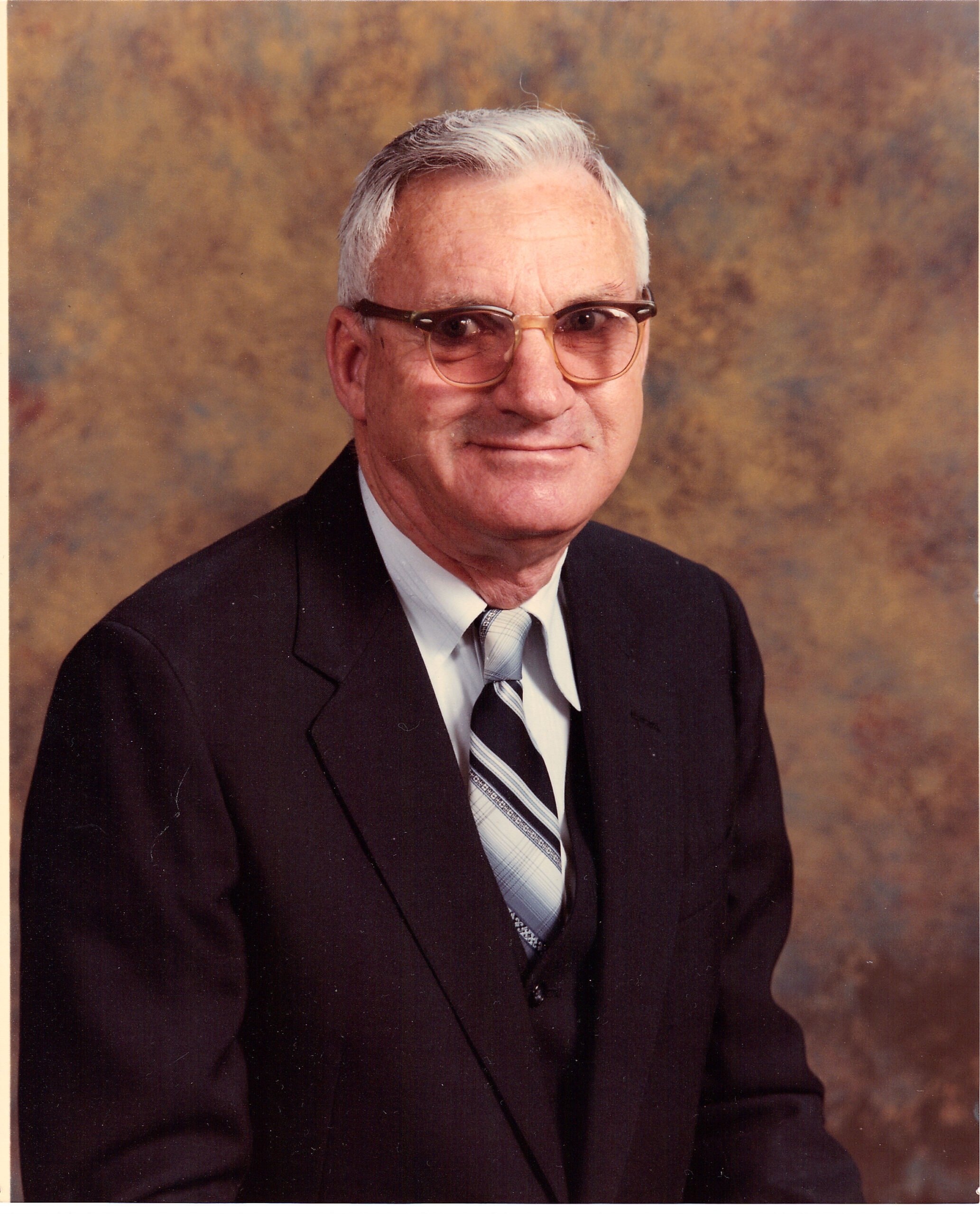
Family History
by
Sam Roach
I began writing this on August 12, 1997. My kids asked me to put things that happened during my lifetime in writing.
My mother told me that soon after I was born, my grandfather Roach came by and saw me in the bed and made the comment “there is my little man.” That name, “Little Man”, followed me until I was almost grown. Some of the folks thought that was my real name.
Our home at the time had a picket fence around the yard. I remember when I was about two years old and I was out in the yard playing when someone came up on horseback and called my mother to the porch. He told her that my grandfather had passed away.
From then until I started to school I did a lot of playing and some work. It was my job to round up the milk cans in the afternoon during the winter months. If I didn't find them all I had to get up in the early morning, no matter how cold it was, and go out to the fields all around the countryside until I found the other cans. As a result of this I would have the ear ache and it did hurt. Of course I knew all the trails through the woods and fields and they would get so cold and sometimes I would knock on the door of other people's houses and ask them to let me come in and get warm. I did this after I started to school.
I can remember the year before I started to school I had gone to sleep in Mama's bed where the fireplace was. The older girls were fixing Santa Claus for the next morning. I woke up but I didn't let them know I saw them. That was a disappointment to me, finding out there was no Santa Claus.
The next year I started to school but the teacher for some reason quit teaching at Christmas time. So Papa would take us to the Lavaca school 5 miles away and we would walk home every evening. I was scared of the teacher down there and she would make me stand in the corner for something I had done. I didn't know how to ask to go to the toilet and I wet my clothes every day. There were nine of us all together, three of us, three Allens and three Skeltons, that would all walk back together every evening. We'd pull off our shoes and play in every Creek along the way. I didn't pass that year. They had another teacher for our school the next year. The teacher that I was scared of was named miss Wilcox. In later years she became the teacher at our school. She was a good teacher and I learned a lot while she was there. But, boy was she strict! It was easy for me to be talked into doing things I knew I shouldn't do, but I wanted the other kids to like me so I would do these things and get caught at it, and the teacher would find out about what I had done.
My dad was on the board to select the teacher for the next year. So one day the teacher told me to wait after school and she would carry me home. I thought she was going to tell my dad about all the things I had done at school. So I was scared to death, for I knew my dad would whip me. But the teacher only wanted to talk to my dad about teaching there another year. Boy was I glad. She was real nice to me that day. Ha!
I had two very dear friends in school. They were Roger and Roland Allen. But the older boys in school worked at where Roger Allen and I would get into a fight at recess and dinner. We would really fight it out until our noses and mouths would be bleeding. But no matter what happened, I still went home with these two brothers after school a lot of the time. They were true friends all through life.
While I was in the Navy in World War 2, I was stationed in Pearl Harbor. One day I looked up and there was my friend Roger Allen. He had heard that I was there and he looked me up. His brother, Roland Allen, did the same thing. I was so glad to see them!
I have to back up a little bit for I got a little ahead of myself. During the years I went to this one room school, in the evening when I got out of school, I wouldn't go to straight home. I would go through the woods and play along the Creek bank. I knew every animal down in the ground and every nest in the trees. But when I finally got home I would have to change clothes and work until dark. Like carrying firewood for the fireplace and the stove; drawing water for the house; put in feed for the mules and cows; ofellr go to the field and help pull corn and load it in the wagon. When we got to the corn crib we would have to unload the corn into the crib and it fell to me to unhitch the mules and put them in their stalls. You see, my older brother was already grown and married by that time. So it fell to me to do all these things for I was the only boy in the family.
I hated to pick cotton because it made my back hurt so bad, but I had to pick cotton anyway. I had to help cut the top out of the corn tops while they were still green, tie them in a way that they could be hung on top of the corn stalk, and after they had cured I had to tie them in bundles and store them in the barn to feed the stock later.
Every year my dad would plant 5 or 10 acres of oats to help feed the stock. When the oats got just right, to where they would not scatter off their stalk, we would have to cut them off the stalk. We would have to cut them off as close to the ground as we could and stack them in the field until they dried, then haul them and stack them in the barn. My dad had a cradle specially built to cut these oats with and of course he saw to it that I learned how to do everything that had to be done on the farm. I still have that oak cradle up overhead in my garage. I found it after my mother moved away from the farm. It was in bad shape, but I fixed it. You'd pull that cradle down just one row then you would be ready for someone else to take it for one row.
So you see there was a lot of hard work to be done on the farm. I helped my dad cut hardwood trees to split fence posts out of. I'd dig the holes and replace the fence post wherever they were needed. We would cut down trees and split rails out of them to redo the rail fences on the place. You had to use mallets and wedges to split these large trees.
My dad would pick the prime pine trees that would split easy. We would rive boards out of these trees to cover all the houses on the place. We would use a froe to split these boards to a very thin board. One winter my dad and the hands on the place and me went down to the swamp of the river and spent two weeks down there cutting cypress trees and riving boards out of these trees. They split much better than the pine trees did and they lasted much longer to cover the houses with them. A man named Chaney owned the land and didn't charge my dad anything for the trees. Boy was I glad to get back home.
While I was growing up and attending the one room school, the community would occasionally have a box supper. All the ladies, young and old, would prepare a box of food and the men, young and old, would buy a box. The lady who made the box supper would have to eat with the man that bought the box. My mother gave me $0.50 to buy a box with and Opal Vaughn had to eat her supper with me. Ha! In my going to school there, all of us boys built swings of all types on the school grounds because it had trees of every kind there. Our toilet was a big hole in the ground with a building over it with two commode holes, one for the boys side and one just like it on the girl's side.
While I was small there was a family that moved into the community named Means. They had a lot of boys and girls in the family. They would buy milk from Mama. On one occasion one of the boys who were my age came down to get a gallon of milk. He and I got to playing in the road going back to his house and I dropped the gallon of milk in the road and the glass jug broke. I knew I would get a whipping for this, and I did. The money for that milk meant a lot to me Mama.
I did the same thing one time when I went over and spent the night with my aunt and uncle across the woods from our house. The next morning when I left, my aunt gave me a gallon of milk to carry home. I had to cross a Creek on a foot log going back home. I slipped on the log and fell into the Creek and broke the gallon of milk.
After a few years I finished the 6th grade. They closed that school down and we all had to ride a school bus to the Butler schools. My sister and I had to walk that mile to the old schoolhouse to catch the school bus. If we weren't there, the bus driver would leave us. On those days I had to work all day in the fields and do whatever my dad had for me to do. So I always did my best not to miss the school bus!
After a few years (I don't remember which year) my mother and dad's house burned down in November. I quit school so I could help my dad built another house. There was a colored family living in my grandfather's old house. My dad found another house on somebody else's place and moved this covered family there and we moved into my grandfather's house with whatever furniture we could find and what we saved from the fire. My mother had to cook over the fireplace because we didn't have a cook stove. That winter it was my job to go across the field to the barn and milk the cows. It was so cold that winter until I got home with the buckets of milk, my hands would be frozen around the handles to the milk pails.
We finally got the house built and moved in during the month of March. I had to go to the fields and start breaking the fields to get them ready for planting the crops for another year. I was old enough to do all the plowing by then. I hated using a hoe. When I was 8 years old my dad put me behind a plow and told me he wanted to teach me how to plow. I would try to keep the turning plow in the ground and if it came out of the ground, I had to pull the plow and the mule back and try again. I would do the best I could. I would cry a lot because it was so hard to do. When I learned to plow well, I had the job all the time.
When I was rather small, I would slip off and go out in the woods with my dogs and just sit while the dogs would hunt a rabbit or something else. I would just sit and watch the birds and animals all the time. But one Saturday I did this and when I came home my mother told me that my dad and sisters had gone to Meridian Mississippi to the fair. She said they tried calling me but they couldn't make me hear. Boy was I disappointed and sad about that!
Speaking about those dogs, when they were born their mother gave birth to them out in the woods somewhere. My brother had gotten a divorce from his first wife so he was with me and we tied a rope around the Mama dog and she carried us around through the woods. She wound up in a den in the ground on the Creek bank. We could hear the puppies making a noise way back in the den. We couldn't reach them with our arms so my brother talked me into going inside the den myself. He tied the rope around one of my feet and I crawled in the den and reached as far as I could. We got 6 little puppies out and carried them home. I could still show you that den today. Yes, I could.
The year we got the house built back in the fall, I went back to school and my brother took me to see a football game. It really impressed me, so, I went out for football and played four years. I really enjoyed it. But, you know, none of my family ever saw me play a game of football. My mother and dad told me I couldn't play football, but I didn't mind them that time. Finally they came around. The first year I went out my coach told me to bring my work shoes and he would carry me to the first game that year. He provided me a pair of football shoes at this game at Leroy Alabama. I played quite a bit that day and regularly from then on. I was standing outside the door looking in. I sat these shoes on the floor and when I started to leave I couldn't find my shoes. Someone had stolen them and I knew I couldn't go home without them. So, I spent the night with Jimmy that night. The next morning I went into the town of Mount Sterling and someone came up to me and told me that I would find my shoes tied up overhead and doctor Tom Littlepage’s barn. I went to the door of doctor Tom Littlepage’s house and asked him if I could go and look in his barn and see if my shoes were there. He agreed I could and said that his son had done it again. His son was named Cannie Littlepage. Later when we had a game there at Butler, someone had put one of the visiting team member’s clothes in my uniform. I was called into the office at school on Monday after the game. The principal, Mr. Fowler asked me if I knew anything about this. I told him that I did not. That was the first time I knew about this. He said, “Sam, I know you didn't do this, but I had to ask you about it. We think we know who did it.” It turned out that it was Cannie Littlepage. He later became the Sheriff of Choctaw County and he was caught bootlegging while in office. He was sent to prison for a spell.
Again to my years of playing football, I never got hurt playing except in the last game in the fall of 1937. I was to finish high school the next spring of 1938. We only got beat just one game that year. There was a big rivalry between Silas and Butler. They beat us by 6 points in the last game of the year. My eyes were all black and blue. I played on both offense and defense. I was already 21 years old at that time and I was giving them fits getting both in their backfield and tackling their ball carrier all the time. They decided to team up against me to keep me from getting back there so much. I got knocked out at the very last of the game. Someone had told Mama that I got hurt, so she was upset when I got home.
So, my coach and another man teacher carried me home that night. On the way home they asked me would I like to go to college at Howard College in Birmingham (now it is called Sanford) on a football scholarship. I told them I was already 21 years old and had already signed a note at the bank so my father could buy another mule to help him in farming. I had to go back in the CC camp to pay off that note. So, that cancelled my chance of going to college. When I got home, my mother and father were both up and I told them about the coaches offer. My father broke down and cried when I told him I couldn't go because I had to go back to the CC camp and pay off that note.
In June of 1938 when I got my high school diploma I left home to go back to the CC camp. My father was sitting on the front porch when I left. He had had a light stroke and couldn't work. He watched me out of sight. I had to walk to Butler to catch the bus. That was the last time I saw my father alive because he died October 10, 1938. I still had two sisters left at home going to school and one sister that couldn't work who was always at home with my mother. I had to go back to the CC camp at Foley, Alabama for that would give my mother $25.00 a month to live on. I had borrowed money to buy a bus ticket to get home and I had to go back and pay that somehow.
In the spring of 1939 I got a letter from home saying my mother was sick in bed, and the doctor said she wouldn't get better if someone didn't come and take over at home. So, my sister, Vivian, who lived in Mobile, Alabama, wrote the commander office of the camp a letter asking that I be discharged so I could come home and take over. I was discharged in April 1939, came home, and went to farming. My mother got better right away. My sisters in mobile came and got mother to visit them for a few weeks. She got well. She was 58 years old and lived to be 92 when she passed away.
My two sisters finished school and left home to get jobs. So that left Mama and Mabel there by themselves. I only farmed the year of 1939 for I got a job in Tuscaloosa, AL at Bryce Hospital. I told mother that I couldn't make it farming and the farm was in debt too. I told her that I would send her some money every month and I did. We found a buyer for the timber on the place, paid the place out of debt, and had some left over for mother and Mabel to live on. My mother in turn sent each one of us a check to cover what was left over. I gave mine back to her. I don't know about the rest, but she said that she could live off of what she made off the farm since she didn't have to pay the note off on the farm anymore.
Let me back up a little. In the fall of 1936 when I started to school, it was to be my senior year in high school. One afternoon when I got home from school, my mother and daddy both were out front in the yard talking to a lady that I didn't know. This was in September 1936. My mother and dad hadn't talked to me about what I was about to find out. This lady asked me would I like to go to the CC camp. She said that it would help my parents out a lot and that I would have plenty of clothes to wear and lots to eat plus $5 a month for me and $25.00 a month would be sent to my parents for them to live off of. I told her I wouldn't mind if I would help my family out. She said that I would have to be in Butler by 5:00 AM the next morning to catch a bus that would be carrying a bus load of boys to the CC camp. If I wanted to I could go back with her if I had somewhere out there to stay for the night. I told her I would just go back with her. Now I had never been away from home before this and I didn't know anything about the CC camp but I went with her anyway. She told me to carry one change of clothes with me. I didn't get back to see my family until four months later. I was never back at home for very long at a time anymore after that except the nine months that I came back to finish high school.
When I was a young boy my dad ran a small store and a grist mill combined together. He would grind people's corn into meal for them and he had a measurement that he would dip it full of corn for his charge for grinding their corn. He would do this every Saturday. The store part would be open all that day. People would come get their corn ground and buy their other needs from the store.
So, dad decided to give me a job. He had 200 pounds of ice delivered to him on Friday. He gave me the job of making a freezer of ice cream. I was to freeze it, then dip it up in ice cream cones and sell them for $0.05 each. I would do that all day long as long as the ice held out. I was really tired from turning that freezer all day long, People got used to that on Saturdays and they would sit and wait until I got the first freezer ready. Mother would have the milk from the cows and fix the ice cream ready to be frozen. This continued for quite a while.
In the wintertime my dad had a pot bellied stove in the store and he and other people would come by and sit with him. They would shop and buy what they needed. I loved to sit there and listen to them talk and tell their jokes.
Along came the 30s and the Great Depression and my dad was letting people charge what they wanted. The farmers couldn't pay up so my dad had to close the store.
I am going back a little now. When I was growing up and doing all this work, I would help my dad in anything I could. My dad always planted sugar cane in the spring; He would have a bank of cane that he banked in the fall before the frost got to it. In banking this sugar cane, he would first lay down a lot of straw on the ground. Then lay the cane down. Then cover it up with dirt completely. Then in the spring he would uncover this cane. He prepared the land where he was going to plant the cane. We would place this cane in a deep row then cover it up with fresh dirt. As it sprouted, we would throw dirt to it with a plow. We would mix it with cotton seed meal. Then in the fall, all the cane that he didn't want to bank for another year, he would cut it down at the ground and make sugar cane syrup out of it.
It fell my lot to have to strip all the fodder off this cane that we were going to make syrup out of and then haul it to the syrup mill. My dad was busy cooking syrup for some other people. I had to place this cane just right in front of the grinder. After the other family got through grinding their cane, a mule would be hitched to a long lever that pulled the grinder around and around, squeezing all the juice out of the cane into a barrel. Someone had to carry this juice from the barrel to another barrel located at the pan where they were cooking the syrup. Someone was busy feeding this can into the grinder all the time and removing the dry stalks away from the grinder. Every family had to furnish their own wood to keep the fire going under the pan that was cooking the syrup. Someone stayed busy keeping the fire going all the time. So, you see, there was no way to rest on the farm.
At night after they cooled the pan down with water, we had to go home and do a lot of other things. Late at night my dad would be tired from standing on his feet all day long for he couldn't leave that pan or the syrup would burn. So, it fell to me to do all the night chores after we got home.
One one night, Mr. Jackson Vaughn's hogs got out into the barrel where the skimmings were and they all got drunk. You should have seen them the next morning. The hogs were all drunk and couldn't stand up. That was a sight to see! Ha!
All during my growing up years, my dad always had a lot of hogs to kill in the wintertime. About 3 months before it was time to kill hogs, my dad would start fattening the hogs to be killed for meat for the next year. He would go and cut down small pine trees; he would skin all the bark off these poles; he would build a small pig pen big enough for two hogs. The pig pen had a floor to it. He would start feeding them all the shelled corn they could eat and all the water we could keep in a trough with the corn. When wintertime came we would pick the coldest day and dad would go pick out the fattest hogs he had, and make plans for a hog killing day. We would start off with filling the wash pot full of water, building a fire under this pot and getting it hot enough that it would skin the hair off the hogs, by putting a 500 gallon drum under the ground that would hold water and let it be slanting to where you could slide a hog down in this hot water. You'd pull the hog out and check to see if the hair would pull off. If not, put the hog back in hot water. Then pull the hog out and start scraping the hog's hair off. You sometimes had to turn the hog around and put the other end in the hot water and pull the whole hog out on a boarded area and finish scraping all the hair off where it would be clean as a pin. Then we'd hang this hog up where the hog would not touch the ground. We would get a sharpened stick, sharpened on both ends so you could put this stick in both back feet where it would pull this back end as far as possible. Then you'd use the hot water to wash the hog off before starting to cut the hog open to remove all the guts out. Then you place the hog on a table and cut it like you want it. Then you let it lay there overnight before bedding it down in salt. Let it stay in salt about one week, then take it out and hang it up in the smokehouse where we would build a fire under the meat with a special kind of wood (HiCherry Wood). During the cutting up of this hog you would trim all the fat off and make lard out of it. The next day we would put these trimmings in the wash pot and build a fire under it to cook the lard out. You would then have cracklins. By using Red Devil lye it in it while it was cooking, we would get the Red Devil lye by pouring water over the ashes we saved over the last year. After we had made the lard, then we would make the cracklins, and then the soap. The lye soap was real strong. It would clean your clothes real well. It would clean yourself too if you wanted to use it. After the soap set awhile, you could cut it the size of bar soap.
Well, that's all about hog killing. Of course we used an axe to knock the hog in the head to kill him, or we'd use a rifle to shoot him in the head to kill him. Then you would use a long sharp knife to bleed him by cutting his throat. My dad got to where he would not floor the pig pens because the hogs would get so fat they couldn't stand up on the slick floor and they would fall and break a leg and you would have to kill the hog right away in order to save the meat. You had to be careful not to cut the insides or guts when taking the guts out for it would ruin the meat. My dad would go up on Tic-um-boom Creek and gather bear grass to hang the meat up with.
I'll try to get off onto another subject now. While I was growing up my dad had a lot of cattle in his pasture. He thought of an idea to make some money to help provide for his family. So every Friday he would kill a young cow and dress it where he could sell it from door to door out in Butler on Saturday (that was before the Health Department passed a law forbidding this). He and I would get up real early Saturday morning in time to get to Butler by daylight. I would drive the wagon and he would go from door to door and see if they wanted anything he had to sell. Most of them were expecting him to come. He would cut off whatever they wanted off the beef. He would have turnip greens or collards and anything else he had on the farm to sell. So, about 11:00 AM we would be sold out and ready to go home. We would do this in the spring and summer too, especially when the watermelons were ripe. We would park the wagon in the shade of some tree there in Butler. He would leave me with the wagon to sell while he went from store to store to sell what he could. We would get back home about dark on those days.
My father was a good truck farmer, that is, in growing things that people wanted to eat. One year I remember he planted an acre in watermelons real early with tomatoes set out in the middle of the watermelons and cantaloupes. He had watermelons ripe on June 12th and he went out to Butler and made an oral contract with FD Miller grocery store for two to four cents a pound for all the watermelons. They sent a truck out and hauled 2 loads to their store. Each load brought $500 each. So he made $1000 off the one acre of watermelons before this man broke his contract. My father had so many melons left in the field that year that you could go all over the patch by stepping on rotten melons and not step on the ground.
Going back some more: The year that I came back from the CC camp to finish high school, a friend of mine, Roland Allen, and I played football together that year. The team called him “War Horse” because he put everything he had into helping the team win. He and I would have to walk home together after playing a game out of town. He and I neither one had any money, so we wouldn't have anything to eat until we got home. Most of the time he would ask me to stop by and eat supper with him. He and I grew close to each other during that time. I realized then that he was thinking of becoming a preacher because he talked to me a lot about the Bible.
I went back to the CC camp in the spring of 1938 and I didn't see any of my classmates for about a year. When I got this job at Bryce hospital in September 1939 they put me in a room with another male and when he got off duty that evening and walked in the room who would I see but my friend Roland Allen! We were glad to see each other. I didn't know that he was working there.
Through time we drifted apart. He was working in one building and I was in another. They gave me a chance to stay in one of the rooms on the ward so I moved over there. We didn't see each other much after that because the war broke out and we didn't see each other until we saw each other at Pearl Harbor during the war. Wait, I did see him again before I saw him at Pearl Harbor. Hazel and I were married and he came by and spent the night with us just before he went into the service. We were living on 15th St. and I was working at the VA Hospital when he came by and spent the night with us.
After the war ended we didn't see each other for a long time. We wrote each other often and he would send me letters about his work as a missionary in Paraguay, South America. Then when he would come back to the US, he and his family would come back down this way when they were going to see his family down at Butler and Meridian. They would stop by and spend a couple of nights with us. So you see we stayed in touch. After his wife died and he retired, he was staying with his daughter in Kentucky. His daughter brought him to see us once, just the two of them. When he passed away, his daughter called me and told me about his death. I couldn't go to his funeral but I sent flowers. His daughter sent a note to me saying they received the flowers.
Now I'll tell you about his brother, Roger Allen. After the war ended I didn't see him but once. He would pass by my Mama's house at Butler for he had a route as a salesman and he would stop by Mama's a lot and she would tell me about seeing him. One day I got a call saying that Roger had died on the operating table in Meridian. I went to his funeral there in Meridian. So, you see that I have lost my two dear friends and I miss them very much. Just to know that they are gone saddens me very much.
Through the years I have been in touch with another friend, C.L. Tims. He finished school the year that I did. During that year I went and spent the night with him and his family. He did most of the getting in touch with me through the years and Hazel and I have visited in his home also. He stopped by to see me lots of times.
I need to mention that I lost another friend last year. He died from lung cancer. Johnny Williams died last August here in Tuscaloosa.
Now I'm going to go back up a little now. This house that we all were raised in that burned down was a big house. Looking from the front, you see one big room on the left and a big room on the right with a big hall in the middle that went all the way down through the house. The front rooms each had a fireplace in them. That's all the heat we had in the house except the stove in the kitchen. Behind each one of those big rooms in front, there was a small bedroom. Then on the left there was a big dining room and behind that was a big kitchen. Plus there were 12 windows in the house and each room had a door leading out onto the hallway. You could always find a cool breeze in this hallway during the summertime and freeze to death in the wintertime. We could always look across this field and see the house my grandfather had raised his family in.
So, I told you about how this house looked before it burned down so I could tell you this: Before I was born (so I was told), my Grandfather got where he couldn't take care of my uncle Fred Roach (Papa’s brother) because he wasn't able to walk or get around any. So, Papa moved Uncle Fred up to his house into this small bedroom on the right behind the big bedroom. This small bedroom never had any heat in there at all. Mama and Papa and we kids had to see after Uncle Fred. He we had to feed him three meals a day and see that he stayed clean as much as we could. He'd sit in a chair and look out the window, looking at his father's house across that field. In the winter we would pull him in a straight chair across the hall to the bedroom my mother and dad stayed in so he could stay warm during the day. Then when he got ready to go to bed that night, we would pull him back to his room and get him in his bed. In the summer we would leave him out in the hall of the house and he would sit there until some of us came along and moved him. He would bump the floor with his stick when he wanted us. After I came along it became my duty to take care of him until he died. He had bad sores on his feet and legs. I had to dress those sores, bathe him, and put his clothes on and off every day. His name was Frederick W. Roach. He was born on December 21 1861 and died on June 21 1929. They didn't embalm him and they made a casket out of some plain lumber with a handmade lid to cover him. They nailed the lid down before they left home with his body. He was supposed to be buried at 2:00 PM but there came a big rain at 12 noon that we didn't know if we would make it to the graveyard or not. Some of us sat with his body from the time he died until we put him in the ground. The roads were so bad that the mules could hardly pull the wagon. We had to dip the water out of the grave before we lowered him into the grave. They dug the graves in those days where there was a shoulder just above the casket. When that rotted it would sink and you'd have to put more dirt on the grave.
I need to back up a little again: This is concerning those little Feist dogs I had. There were two of them. One night late I woke up and heard a lot of fox hounds in the woods like they were chasing a fox through the woods. I was sleeping in this bedroom near the kitchen. Those fox hounds were coming closer and closer to the house and they came right through the hallway in the house. I discovered they were chasing those two Feist dogs of mine. These two dogs had come through the house and ducked under the house and the fox hounds kept running on into the woods. Ha! I had been told that these fox hounds would run after a Feist dog the same way as they would run after a fox because they had a smell like a fox. They woke up everybody in the house and it wasn't long before these dogs of mine were standing on the porch barking at the fox hounds. Ha! That was quite an experience for us. We all just laughed about it after it was over.
Then a lot of times at night I would wake up and my dogs would have something treed. I would get up and go see what they had treed. Most of the time it was a opossum and I would knock the opossum out of the tree and carry it home and put it in a pen. I'd feed it a day or two and then kill the opossum and skin it. I’d stretch the hide over a board just right and let the hide dry. Then I'd sell it for $0.25. Boy was I rich I thought. Ha! Mama would cook the opossum and it was really good cooked with sweet potatoes. We all enjoyed it very much.
When I was a little boy, my brother Willie was 13 years older than I was. He would be playing with me and get me down on the floor and hold me down and goose me so hard until it hurt so bad, for I couldn't get away from him. When we would be cutting wood for the house, my brother Willie would say to me “Sam, one of these days all this will belong to me.” I wouldn't say anything, but I couldn't understand why he wasn't considering any of the rest of us because it all belonged to my father and mother. In later years he got married for the second time to Erma Goodman. They were living in the house with all of us. Our aunt Annie Cochrane owned 80 acres of land joining my dad's place. She wanted to sell the 80 acres. So, Willie decided he would buy it if Papa would go on a note with him. So, Papa went on this note with him and it included papa's mules, wagon and so many cows. When Willie couldn't pay off this note, the bank came and took Papas mules and wagon and ate his cows.
When it came time to start plowing the land, we didn't have anything to plow with (no mules or horses). A man that hauled logs for a sawmill let us use two of his big mules to plough with that year. We got all of the land broke up and planted. My sister Vivian and her husband John sent Papa enough money to buy him a young mule. He had to go to Meridian to buy this mule. He caught a ride to Meridian and bought this young mule that had never been ridden. Papa walked all the way home from Meridian with this mule with just a bridle and rope around the mules neck. That turned out to be the best mule we ever owned. He walked all the way from Meridian to home because he didn't have enough money to pay someone to haul it home for him.
When I was a little boy, my dad had torn down a building out in front of the house. He had it where people could tie the mules up under this shed while they were in the store. In tearing down this building he had left some boards lying around with nails still in the boards. He told me not to play around the boards, but I didn't mind him, and I stuck a nail clear through my right foot. He came out and pulled that nail out of my foot and poured kerosene on it. Then he soaked my foot in turpentine and wrapped it up for that day. It got well.
While my dad operated this little store, I swiped a sack of Bull Durham Smoking Tobacco and paper to roll my own cigarettes with. With some of my friends, we all were going to learn how to smoke. My dad caught me with all this on me. He talked to me about all this, and then he got a limb and whipped me. I told myself that if that was what I would get for smoking, and I didn't even like smoking anyway, then I would just not smoke anymore. So, I never smoked anymore. That was the best whipping I ever got! Ha! Of course I didn't think so at the time, for my dad whipped me real hard when he would whip me.